Open beta · Free during early access

Your AI dev team,
working as one.

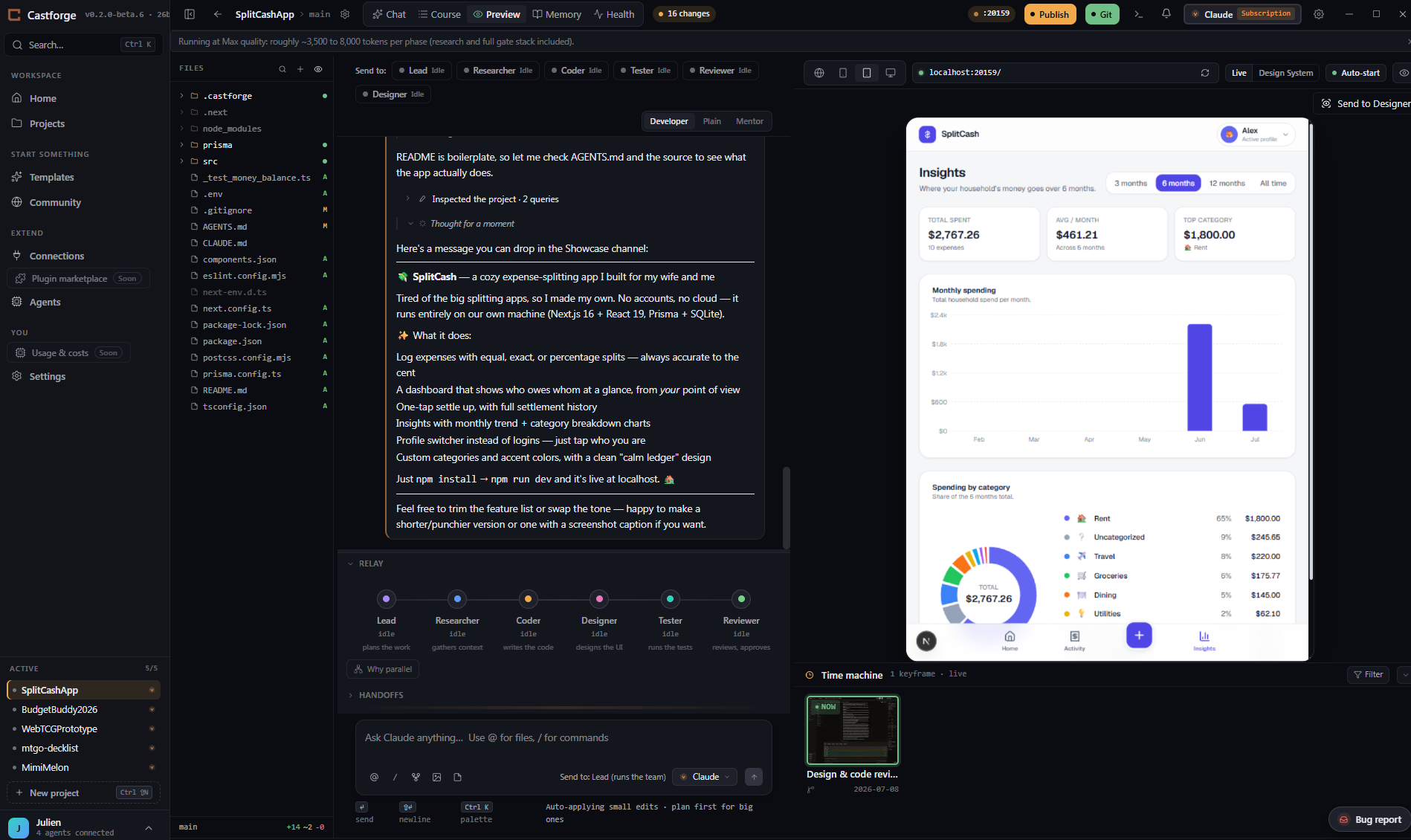
Castforge runs a team of AI coding agents in real roles: a Lead who plans, Coders who build, a Tester and a Reviewer who keep it honest. They plan, code, test, and review together on a live board while you steer. Free during early access, start with a GitHub Copilot sign-in, bring your Claude or ChatGPT subscription when you want more, or add your own API key.

Windows 11+ macOS coming soon Linux coming soon v0.6.2-beta
The Castforge workspace: a role lane with Lead, Researcher, Coder, Tester, Reviewer, and Designer handing off live, next to a live preview of the app being built.

Connect up to 17 AI coding agents, five with a free or subscription sign-in.

GitHub Copilot Free Claude OpenAI Codex Google Gemini OpenRouter Cursor Factory Droid Local models See the roadmap →
Connections

Bring the subscriptions you already pay for.

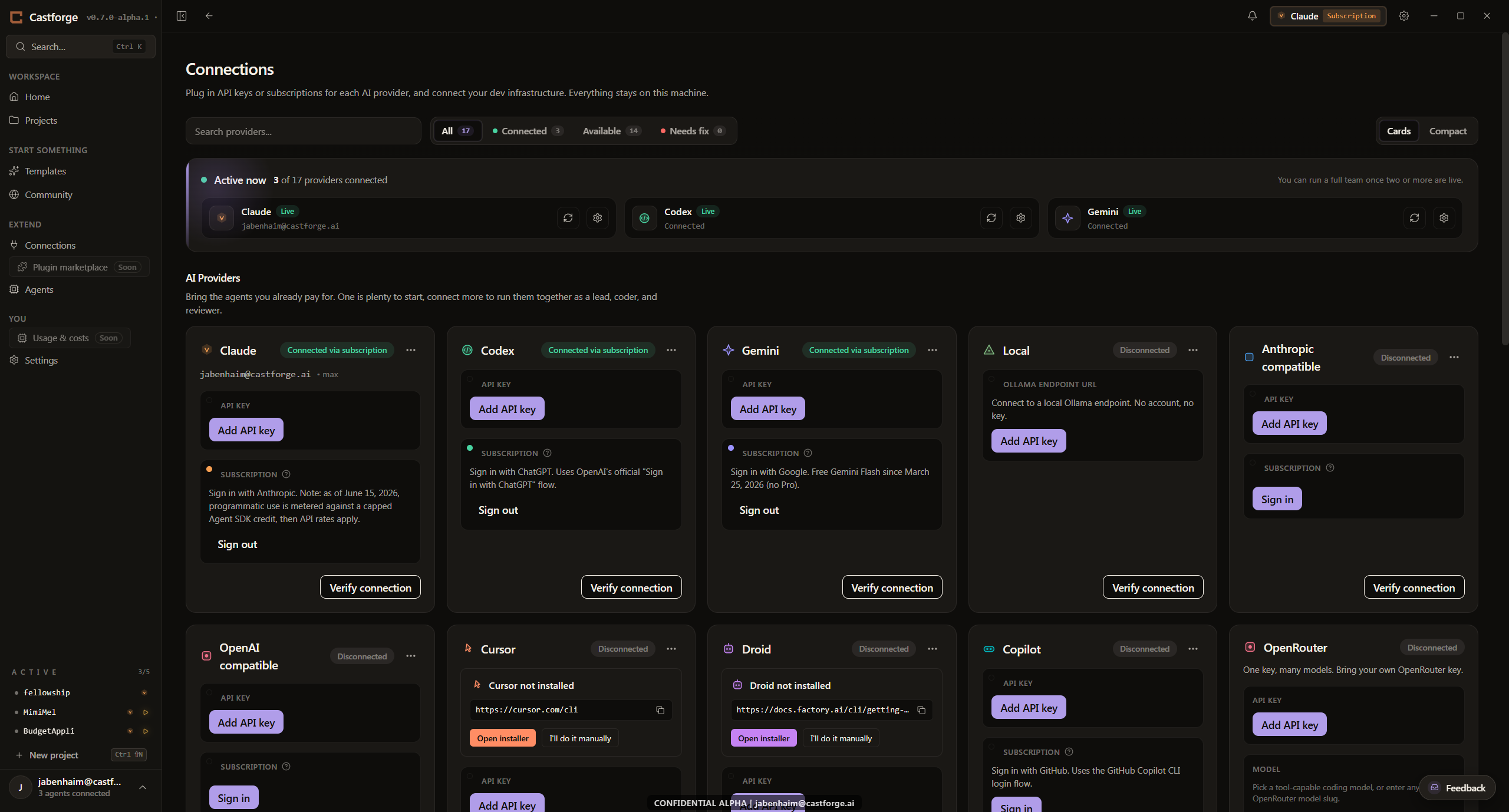
Connect the AI you already have and the services your app runs on, all from one screen. Sign in with a subscription, paste an API key, or start free with a GitHub Copilot sign-in. No per-token bills, and everything stays on your machine.

  • Sign in with Claude, ChatGPT, or Google, or add your own API key. One is plenty to start.
  • Wire in GitHub, Vercel, and Supabase as tools your agents can use, explained in plain language.
  • Run two or more live at once to put a full team on the board.
  • Every seat runs in its own isolated home, so a role you set to read-only is read-only on every agent, not just on some of them. A read-only seat is not handed your connected servers.
The Castforge Connections screen: Claude, Codex, and Gemini connected via subscription, with GitHub, Vercel, Supabase, Cloudflare, and Stripe available as dev infrastructure.
Multi-agent teams

Give every job to the agent best at it.

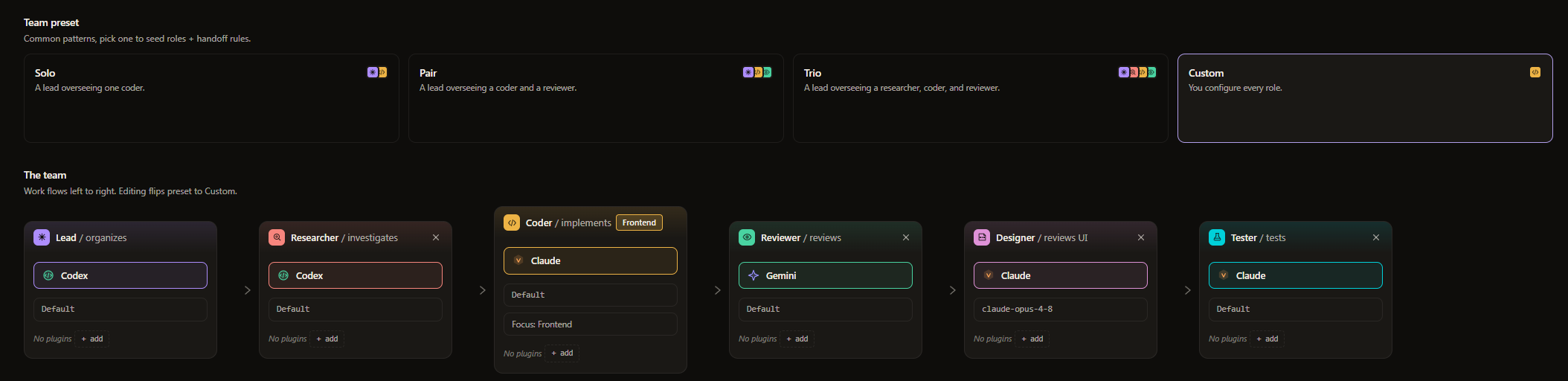
Castforge runs each project as a real team. A Lead breaks the work into a plan. Coders build it. A Tester and a Reviewer check it. A Designer guards the look. You assign which agent fills each role, and pick the model per seat.

  • Presets to start fast. Solo, Pair, Trio, or build a custom team.
  • Roles hand off to each other and run a review loop until the work holds up.
  • Run several agents in parallel, each on its own branch, then merge with a review gate.
  • A Designer role reviews the UI against a design spec, not just the code.
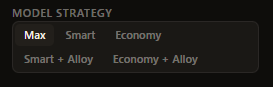
The Castforge model strategy control, with Max, Smart, and Economy tiers.
Set a model strategy per task, from Max quality to Economy.
The Castforge team roster: Lead, Researcher, Coder, Reviewer, Designer, and Tester, each labeled with the model powering it.
Live preview

See your app as you build it.

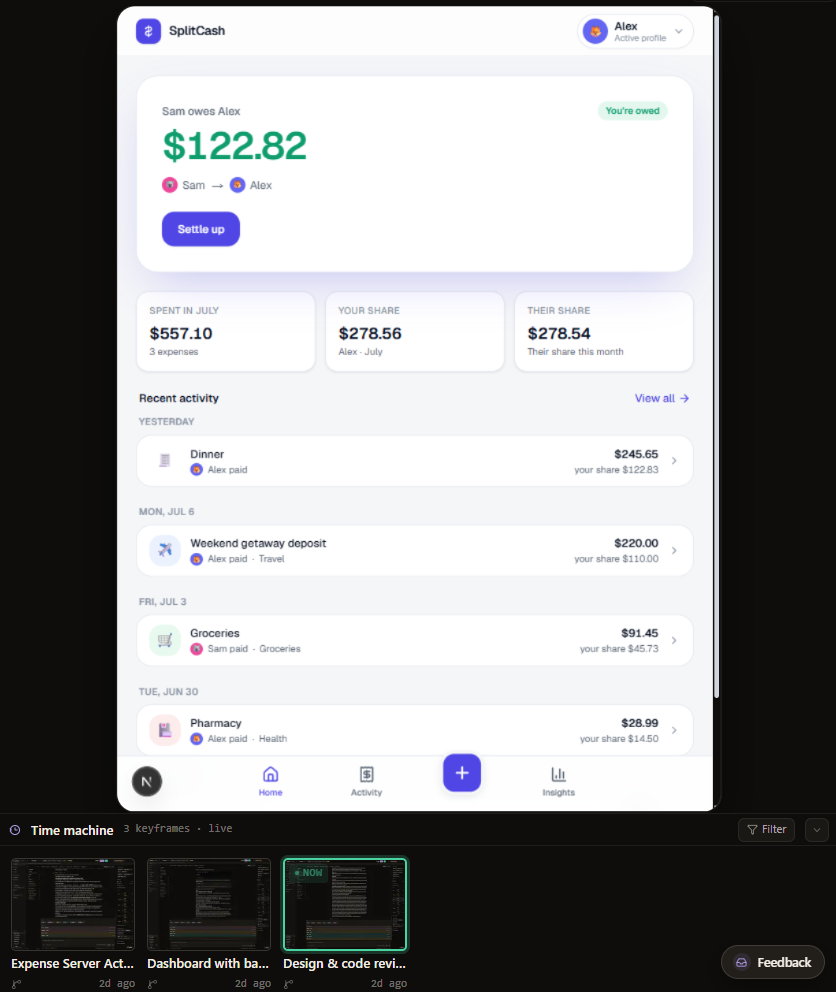
Watch your app render live as the team works. Frame it for desktop, tablet, or phone. Step back through changes with Time Machine and pick up from any point.

  • Live preview with desktop, tablet, and phone frames.
  • Time Machine: scrub back through snapshots of your app.
  • Permission modes: Careful, Balanced, or Autonomous. You decide how much rope.
Castforge live preview with the Time Machine drawer showing keyframe snapshots you can step back through.
Course board

Plan the work. Watch it ship.

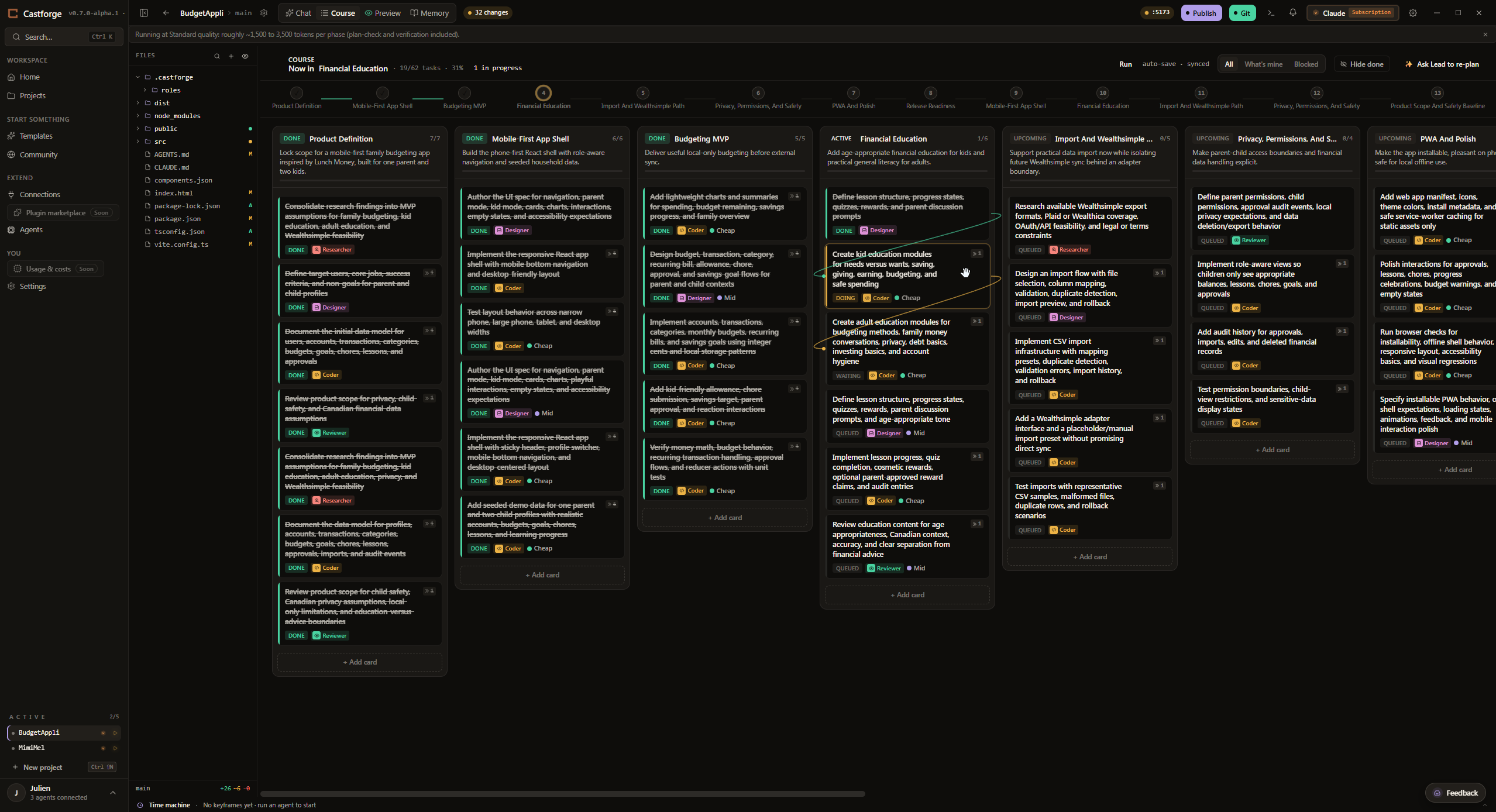
The Lead drafts a phase board for each project. Cards move as the team works, and dependencies are enforced, so nothing starts before the work it needs is done.

  • Lead agent drafts plans automatically for each project.
  • The Lead drafts the plan; cards move as the team works.
  • Dependencies are enforced so nothing ships out of order.
  • New: group your phases into milestones, reorder the backlog, and run them in sequence. The run pauses at each milestone boundary so you can review before rolling on.
  • Finished work stays open. Reopen a completed phase and see what each card actually left behind, including a commit reference you can paste.
  • Move a phase in the queue from its header. If a move is not legal because the phase depends on work ahead of it, Castforge names that work instead of silently refusing.
The Castforge Course board: phases laid out as columns with task cards tagged by role, one card marked as doing.
Adaptive intent routing

Small ask, small process.

Every message you send is read for intent and handled at the right depth. A one-line fix gets done on the spot with no ceremony. A big feature request gets a full plan and the whole team.

  • The depth is announced in chat, with a one-click override. Say "plan it properly" or "just do it" and it switches.
  • Scope bounds are honored. Ask for the milestones and nothing more, and it stops there.
  • A request bigger than it looked bounces up a level and tells you why.
  • Messages you type mid-run queue visibly and get picked up at the next safe boundary.
  • A planned ask tells you where it landed, naming the phase it joined and its place in the order, instead of vanishing into a queue.
  • Ask for the same thing twice and it is not planned twice. The repeat is parked and you get two real choices: move it to the front, or leave it where it is.
intent
"fix the typo in the footer"
done on the spot, no ceremony
"add multi-user billing"
full plan, whole team, gates on
announced in chat, one click to override
Nothing runs unasked

Opening a project spends nothing.

Open a project and Castforge reads it before it touches it. You get a plain summary of what it found, on the board and in chat, and exactly one action to click. No agent starts, and nothing is billed to your provider, until you click it.

  • The health read is free. It looks at the state on disk, not at a model, so opening a project costs you nothing at all.
  • One action, not a menu. Heal it, resume it, or carry on, whichever the project actually needs.
  • A project it cannot read still gives you a way in, rather than a dead screen, and says plainly that the read failed.
  • Then it gets out of your way. Once you have said go, the team runs without asking you to approve every step.
on open
?
Checking this project…
reads state on disk, no model call
6 cards done, 2 waiting on you
one action offered: Resume
zero spend until you click
Project memory

It remembers why, not just what.

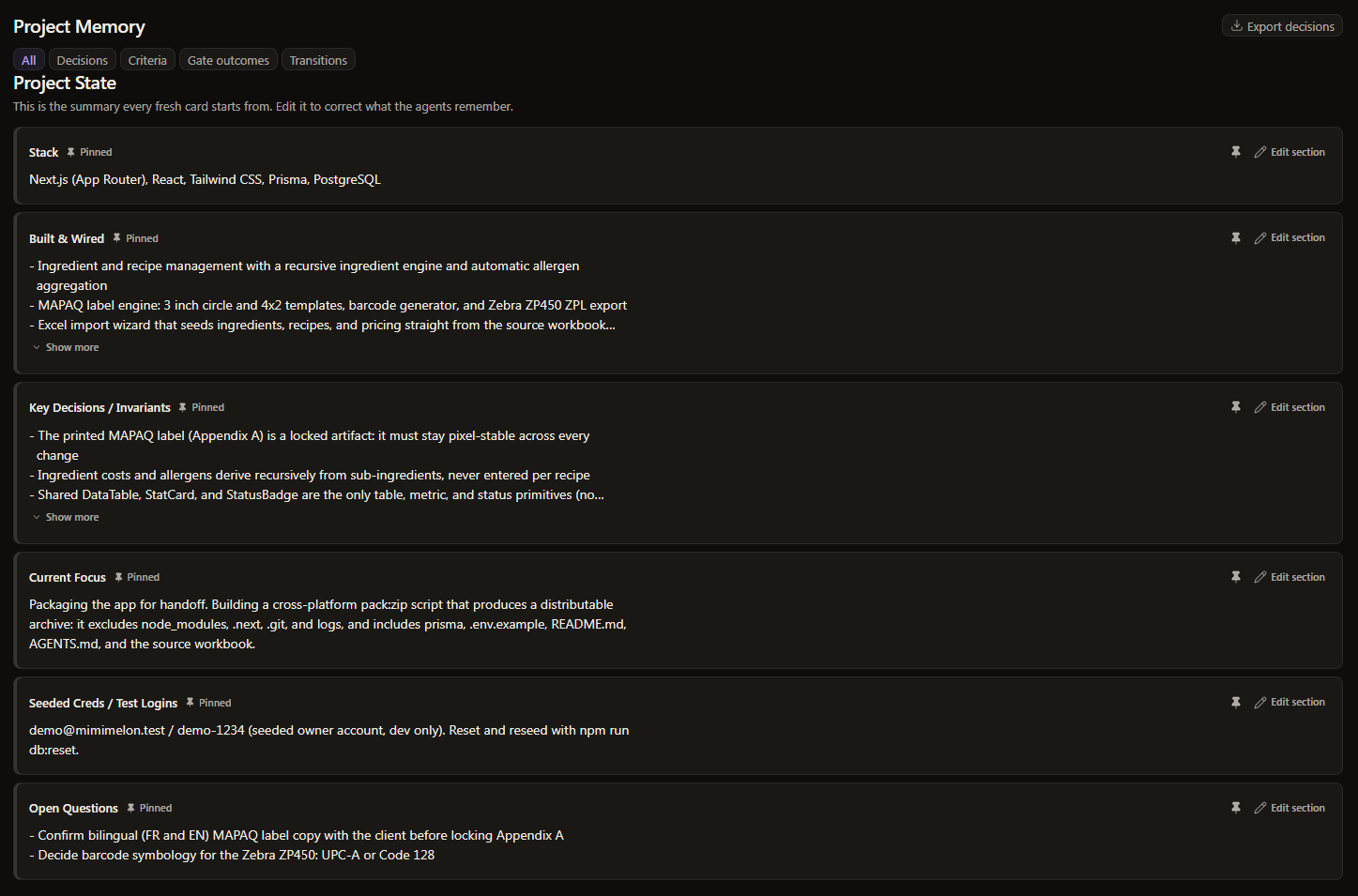
Castforge keeps a living summary of every project: the stack, what's built and wired, the key decisions and invariants, and the current focus. Every fresh agent reads it before touching the work, so context survives a new card, a crash, or a restart with no lost ground.

  • A shared project state the whole team starts from, editable any time to correct what the agents remember.
  • Backed by an append-only ledger you can filter by decisions, criteria, gate outcomes, or transitions. Nothing is ever overwritten.
  • Export to a decisions.md file in your project, so the history commits and reviews alongside your code.
The Castforge Project Memory tab showing the Project State summary: Stack, Built and Wired, Key Decisions and Invariants, Current Focus, Seeded Creds, and Open Questions, with filter tabs for decisions, criteria, gate outcomes, and transitions.
Quality and review gates

A quality bar built into the team.

Pick how much checking each project gets with a quality tier, and the tier decides which review gates run: the Lead's plan-check before any code is written, and a goal-backward verification of the finished work against its acceptance criteria.

  • Three tiers, from a fast Draft run to a Max run with research and testing on top of the full gate stack.
  • The plan-check gate catches a weak plan early; the verification gate checks the result against the goal.
  • When a tier turns a gate off, Castforge says so. A skipped gate is never shown as a silent pass.
The Castforge quality tier control: Draft (light), Standard (balanced), and Max (full). Draft is code only, Standard adds plan-check and verification, and Max adds research and testing.
Plan-check gate
before any code is written
Goal-backward verification
delivered work vs. the acceptance criteria
Self-healing runs

It says when a step did not really finish.

The hard part of running a team of agents is not the work, it is knowing whether the work happened. A card that reaches Done with no record of where its work was written gets named, repaired once, and reported. The board tells you it repaired itself rather than going quiet.

  • A check that cannot run says so. Asked to verify something that does not exist, a seat reports the check was impossible instead of passing by default.
  • A Done that a later turn overtook says so on its own card, instead of sitting there looking current.
  • Stop means stop, and a real failure is left to read as a failure rather than being tidied away.
  • The repair reports once per pass, so a run that is fixing itself never looks like a run that has stalled.
card 4 of 6
!
Done, but nothing recorded where
named, not silently accepted
Repaired itself, once
and told you it did
a quiet run is the bug, not the goal
Backend pieces

Drop in the parts that are a pain to wire up.

Auth, a database, payments, email, file storage, scheduled jobs, tests. Each one is a short guided setup instead of an afternoon of boilerplate.

Auth
Sign-in, sessions, and protected routes, set up for you.
Database
A schema, migrations, and queries wired to your app.
Payments
Checkout and billing flows scaffolded, ready to test.
Email
Transactional sends and templates, hooked up.
File storage
Uploads and downloads with a storage backend.
Scheduled jobs
Cron-style tasks that run on their own.
Tests
A test harness the Tester role can run and extend.
Integrations
GitHub, Vercel, and Supabase, connected from setup.
Publish

Ship your web app to the web.

Castforge drafts code signing, custom domains, screenshots, and store-listing drafts, you review, then publish your web app. Web publishing is coming soon, with mobile and desktop targets to follow.

SoonWeb SooniOS SoonAndroid SoonDesktop
deploy
Publish to web
coming soon: your own Vercel URL + custom domain
How it works

Three steps to a working team.

STEP 01

Connect your AI.

Sign in free with GitHub Copilot, bring a subscription you already pay for (Claude Pro, ChatGPT Plus), or add your own API key. Castforge launches each agent's own secure login, so we never see your password. Requests go from your machine straight to your chosen provider.

STEP 02

Pick a starting point.

Open an existing project or start fresh. The Lead suggests a team and drafts a plan you can adjust before anything runs.

STEP 03

Steer it to done.

Watch the board, preview live, approve or redirect. You are always in control, at any point in the work.

How it compares

Built for a team, not a single agent.

Parallel agents stopped being the differentiator this summer. What still is: a team that reviews its own work, tells you what it could not check, and spends nothing until you say go.

Capability CastforgeWindows workspace First-party agent appsClaude Code, Codex, Gemini CLI AI coding IDEsCursor, Windsurf, Copilot in your editor Agent orchestratorsGitHub Copilot app, Devin, Conductor
Every major coding agent in one app Claude, Codex, Gemini, Copilot, Cursor, and more Its own models only Many models, one agent Varies by tool
A reviewed team that plans, builds, tests, and checks each other Built in, a reviewer on every card Subagents, you write the roles Parallel subagents, no review role Parallel, you review
Matches the amount of process to the size of the ask Adaptive intent routing, announced with a one-click override No process layer to scale No process layer to scale One fixed pipeline per run
Says what state your project is in before it runs anything Free health read, then one action to click Starts on your prompt Starts on your prompt Starts on your prompt
Repairs its own run when a step cannot be verified Names it, repairs it once, tells you Not offered Not offered Not offered
A read-only role stays read-only on every agent Enforced per seat, every agent One agent, one permission set Per-mode, not per-role Varies by tool
Parallel agents on isolated branches Parallel lanes, each in its own worktree Worktree isolation built in Up to eight at once, plus cloud One worktree per session
Keeps a decision record you can reopen A ledger on disk that survives a crash Memory files, no decision history Rules and memories Per run
Step back to any earlier point Snapshots that survive resets Session checkpoints Session checkpoints
Live preview of the app as it builds In app, feeds the Designer Not built in Design mode and previews
Uses the AI accounts you already pay for Your sign-ins or your keys Its own subscription Billed by the tool Your keys
Guided for developers who avoid the terminal Board, roles, one click Improving Editor-first Improving
Provision and deploy your own backend In preview, with a safety gate Not built in Not built in Not built in

Compared against each category's current product as of August 2026, from published product documentation rather than hands-on testing. These tools move fast; if a cell has gone out of date, tell us and we will fix it. Castforge publish is rolling out across beta builds.

On the roadmap · Coming soon

Where Castforge is going.

These are not live yet. Here is what we are building next.

Coming soon

Publish to the app stores.

Ship to iOS, Android, and desktop straight from the board, with signing, screenshots, and listing drafts prepared for your review.

Coming soon

Team plan.

Shared setups and org controls for larger teams. Join the waitlist to hear first.

Coming soon

Beyond Windows.

macOS and Linux builds, and a mobile companion to answer your team's approval prompts from your phone.

Pricing

Free during early access.

Castforge is free while it is in early access. Connect the AI you already have, a free GitHub Copilot sign-in, a subscription you already pay for, or your own API key, and just start coding. Each provider bills you directly for model usage, and Castforge never marks it up. We may add paid plans later; if we do, we will say so clearly first.

What you pay: Castforge itself is free during early access. Because you bring your own AI, you pay each provider (Anthropic, OpenAI, Google, or GitHub) directly for model usage at their price. Castforge never includes model credits and never marks them up.
Who made this

Built by a developer who needed it.

I am Julien, founder of Castforge. I was running Claude Code, Codex and Gemini every day across three terminals, re-explaining the same plan to each one and never quite trusting the word "done". Castforge is the workspace that fixes that.

It is in public beta and free during early access. If you try it and something breaks, I would rather hear about it than not. There is a Discord, and I read it.

FAQ

Questions, answered plainly.

Do I need an API key?
No. The fastest start is a free GitHub Copilot sign-in. You can also bring a Claude Pro or ChatGPT Plus subscription, or add your own API key. Whatever you choose, the provider bills you directly and Castforge never marks it up.
Does my code leave my machine?
No. Your project files stay on your filesystem. We store only your account, anonymous usage stats, and crash diagnostics.
What does Castforge cost?
Castforge is free during early access. There is nothing to buy right now. You bring your own AI, so each provider bills you directly for model usage. We may add paid plans later, and we will say so clearly before anything changes.
Which agents work?
Connect up to 17 AI coding agents. Five sign in with an account you already have: GitHub Copilot (free), Claude, OpenAI Codex, Google Gemini, and Cursor. Local models need no account at all. Bring your own API key for the rest.
Is there a macOS or Linux version?
Windows is the v1 target. macOS and Linux are in active development.
Can my team use it together?
Castforge runs a full AI dev team on every project, Lead, Coder, Tester, Reviewer, Researcher, and Designer, and that is free during early access. Shared setups and org controls for larger human teams may arrive with a later plan. Download it and sign in to get started.
Free during early access

Your AI dev team is one sign-in away.

Download Castforge and sign in free with GitHub Copilot, then watch a real team plan, build, test, and review on a live board, or bring a subscription or your own key.

Windows 11+ · macOS & Linux coming soon · v0.6.2-beta